
JD Prestige Construction
Flat Roofing
Careful inspection, considered preparation and tidy installation for flat roofs on homes and commercial buildings.
A dependable approach to flat roofs
A flat roof has to manage weather, water and everyday use across a relatively level surface. That makes good assessment, careful detailing and quality workmanship especially important.
JD Prestige Construction provides flat roofing services with a formal, methodical approach. On this page you will find general guidance on where flat roofs are used, how to spot problems, what the repair and replacement process involves, and how to look after a roof once it is complete. For advice specific to your building, we recommend arranging an inspection.
Where flat roofs are commonly used
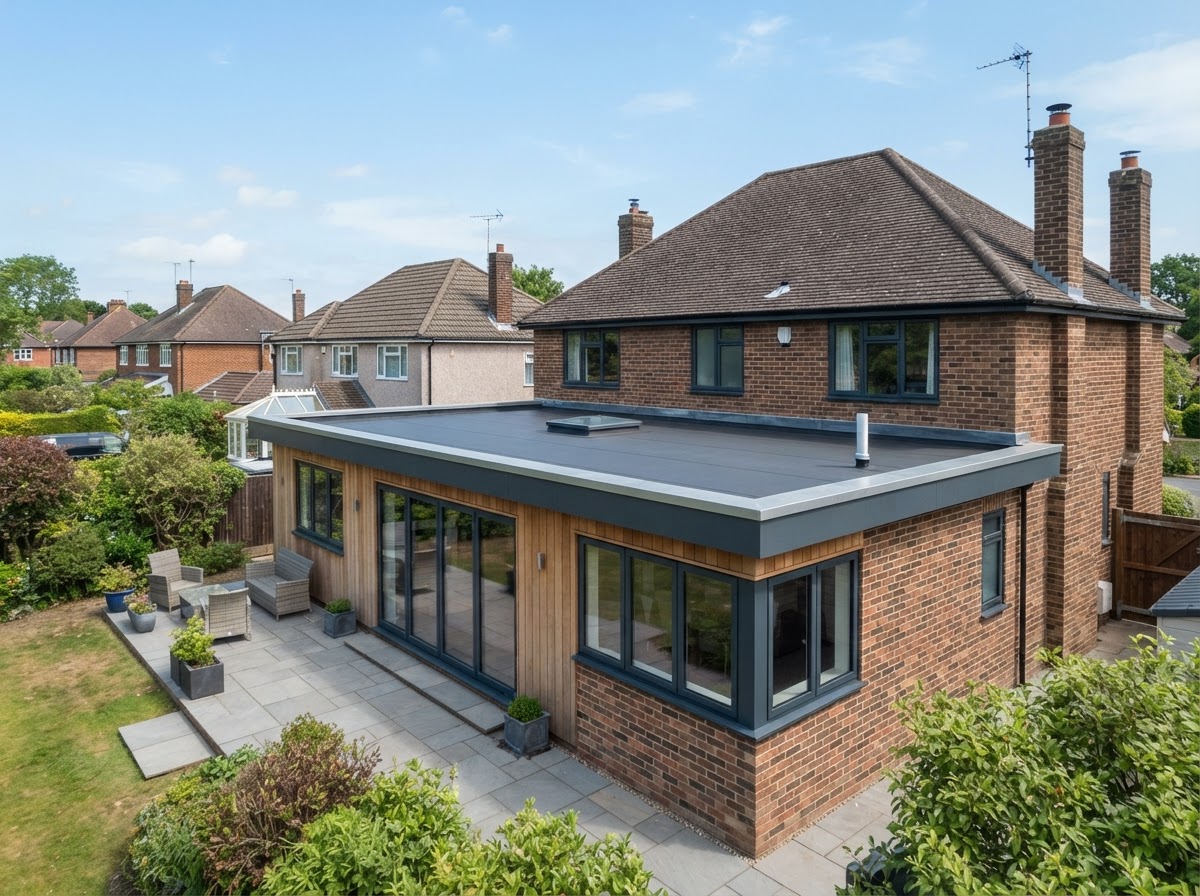
Flat and low-pitched roofs suit a wide range of buildings. They are often chosen for their practical shape and the usable space they can offer.
- House extensions and rear additions
- Garages, outbuildings and garden rooms
- Porches, dormers and bay or entrance canopies
- Shops, offices and small commercial units
- Apartment blocks, terraces and walkway roofs
Signs of damage or failure
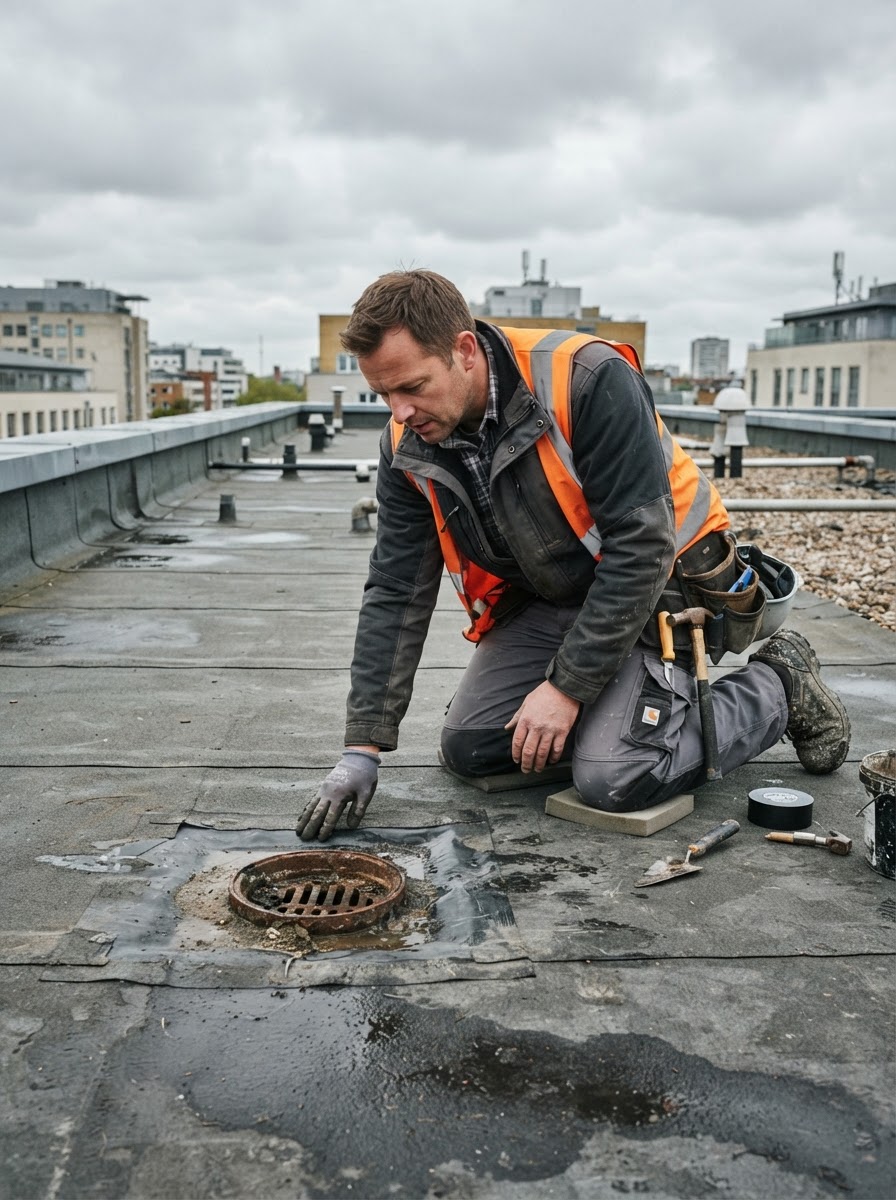
Problems on a flat roof are not always obvious from ground level. These are some of the general warning signs worth acting on early.
Water and moisture
- Damp patches, staining or peeling paint on ceilings and walls
- Pooling water that remains long after rain has stopped
- Musty smells or visible mould inside the building
Surface and structure
- Cracks, blistering, splits or visible wear in the roof covering
- Lifting, loose or open seams and edges
- Sagging areas or a roof surface that feels soft underfoot
Drainage and edges
- Blocked, overflowing or poorly draining gutters and outlets
- Debris, moss or vegetation building up on the surface
- Damaged flashings or trims around edges and upstands
Age and repeated repairs
- Previous patch repairs that keep needing attention
- A roof covering that is visibly weathered or brittle
- Rising heating costs that may point to poor insulation performance
Repair or replacement?
The right answer depends on the condition of the roof, not on a fixed rule. An inspection is the most reliable way to decide.
When repair may be suitable
- Damage is limited to a small, clearly identified area
- The wider roof covering is sound and well bonded
- The deck beneath is dry and in good condition
- The cause, such as a damaged flashing or blocked outlet, can be properly corrected
When replacement may be advisable
- Problems are widespread or keep returning after repair
- Moisture has reached the insulation or the deck
- The covering is at the end of its serviceable life
- Falls and drainage need to be improved across the whole roof
Inspection and preparation
Every flat roof project should begin with a proper look at the existing roof. A thorough inspection helps establish what has gone wrong, how far it extends and what the most appropriate course of action is.
- Checking the roof covering, seams, edges and flashings
- Reviewing outlets, gutters and how water leaves the roof
- Looking for signs of moisture in the deck and insulation
- Agreeing the scope of work, access and protection of the property
Preparation then covers clearing the surface, making safe any areas of damage, protecting surrounding finishes and confirming the materials and build-up to be used.
The installation process
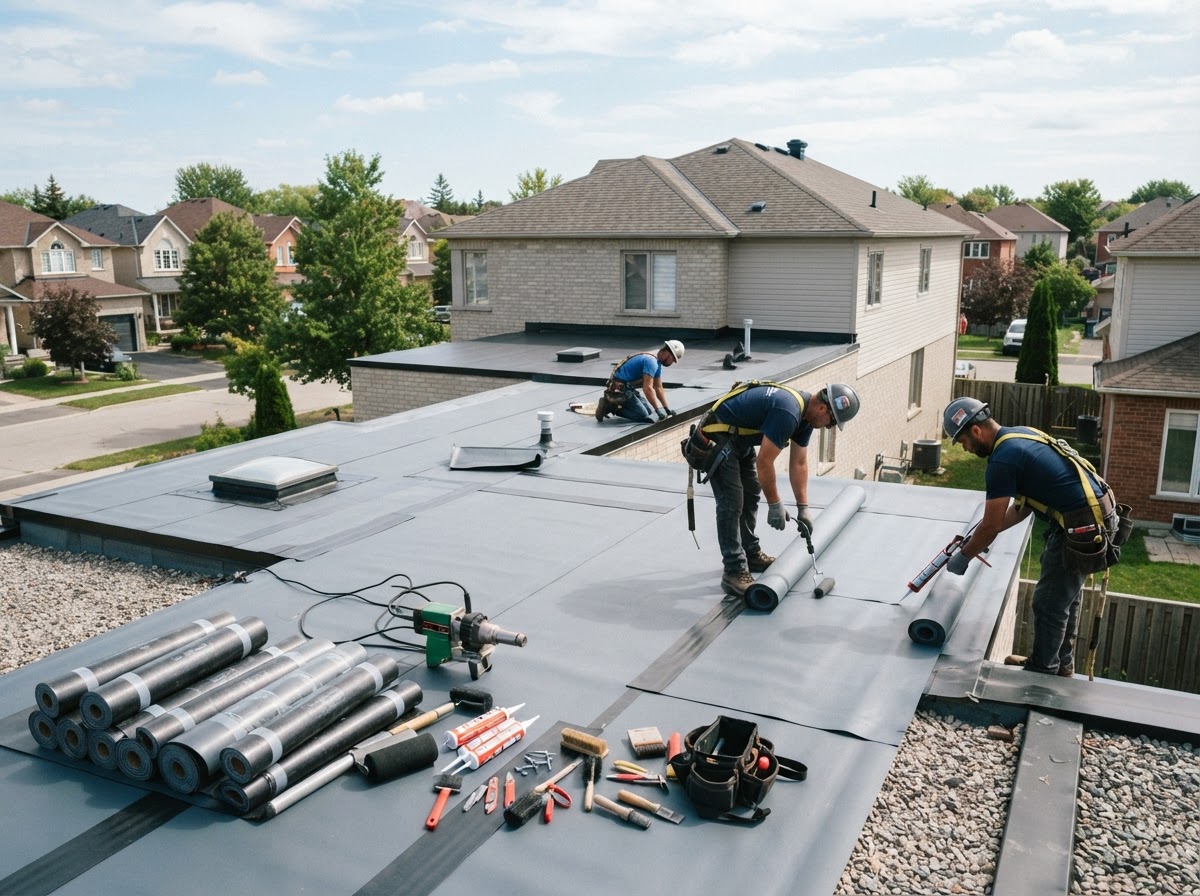
The exact sequence depends on the roof system and the building, but a well-managed installation generally follows these stages.
1. Strip and assess the deck
Where required, the old covering is removed and the deck is checked. Damaged or damp sections are dealt with before anything new is fitted.
2. Prepare the substrate
The deck is made clean, dry and secure, with falls set out so that water is directed towards the outlets.
3. Insulation and layers
Insulation and any vapour control layers are installed in line with the chosen roof build-up, followed by the main waterproof covering.
4. Detailing and finishing
Edges, upstands, flashings, trims and outlets are carefully detailed, as these are the areas where leaks most often begin. The roof is then cleared and checked.
Insulation and drainage considerations
Two of the most important factors in how a flat roof performs over time. The details below are general; the right solution depends on your building.
Insulation
Insulation helps a roof retain heat and can reduce condensation risk when it is correctly specified and installed. Flat roofs are generally built as warm roofs, with insulation above the deck, or cold roofs, with insulation between the joists and ventilation provided. Each has its own detailing requirements, and the suitable choice depends on the existing structure.
Drainage
Despite the name, a flat roof should have a slight fall so that water moves towards outlets, gutters or downpipes. Standing water can add load and accelerate wear, so falls, outlets and guttering are reviewed as part of any repair or replacement. Keeping drainage clear is one of the simplest ways to protect the roof.
Roofing systems and materials
Several established systems are used for flat roofs. The best option depends on the building, how the roof is used, access, and the finish required.
Single-ply membranes
Factory-made sheets such as EPDM rubber or PVC-based membranes, fitted in large sections with sealed joints and detailed edges.
Fibreglass (GRP)
A resin and glass-fibre laminate that forms a continuous, seamless surface, often used on smaller roofs such as extensions and garages.
Built-up and modified bitumen felt
Layered felt systems, including high-performance felt, that build up a durable waterproof covering across larger or more complex roofs.
Liquid-applied coatings
Applied as a liquid and cured in place, forming a continuous coating that can be useful around awkward shapes and penetrations.
Material choice should always be confirmed following an inspection of your roof and discussion of your requirements.
Maintaining a flat roof
Regular attention helps small issues from becoming larger ones. Simple, routine checks are a sensible habit for any flat roof.
- Keep gutters, outlets and the roof surface clear of leaves and debris
- Inspect the roof periodically and after severe weather
- Limit foot traffic and avoid storing heavy or sharp items on the surface
- Have seams, flashings and edges checked by a professional
- Deal with minor defects promptly rather than leaving them
Why choose professional flat roofing
A flat roof leaves little room for error. Professional workmanship matters because the smallest detail at an edge, joint or outlet can decide how well the roof performs.
- An honest assessment of whether repair or replacement is appropriate
- Careful preparation and correct sequencing of each stage of work
- Attention to drainage, insulation and detailing, not just the top surface
- Safe working methods and protection of your property during the job
- Clear communication from first enquiry through to completion
Flat roofing FAQs
How do I know if my flat roof needs repair or replacing?
Localised damage to an otherwise sound roof can often be repaired. Widespread wear, repeated leaks or wet insulation usually point towards replacement. A professional inspection is the most reliable way to tell.
Can a flat roof be installed over the existing covering?
In some cases it can, but it depends on the condition of the existing roof and deck and the system being installed. Where moisture or damage is present, the old covering is normally removed first.
Why does water pool on my flat roof?
Pooling can result from insufficient falls, blocked outlets, deck movement or an uneven surface. Persistent ponding should be inspected, as it can shorten the life of the covering.
Does a flat roof need insulation?
Insulation is an important part of many flat roof build-ups and can improve comfort and energy performance. The suitable approach depends on the structure and the type of roof.
How often should a flat roof be checked?
A regular check, along with an inspection after severe weather, is sensible. Keeping drainage clear and addressing small defects early helps protect the roof.
How can I arrange an inspection or quote?
Call JD Prestige Construction on 07518926294 to discuss your flat roof and arrange the next step.
Speak to JD Prestige Construction about your flat roof
Whether you need a repair, a full replacement or simply advice on the condition of your roof, get in touch to discuss your project.

